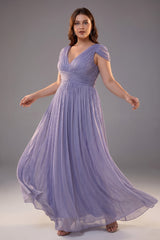
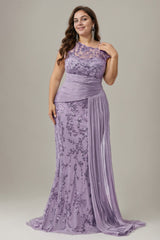
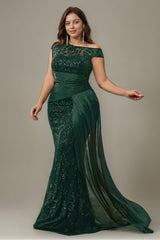
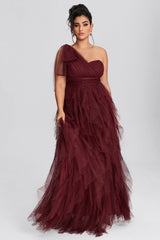
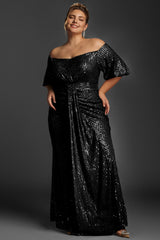
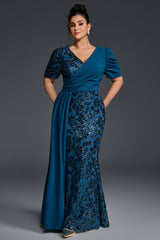
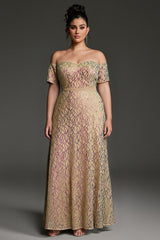

Quick answer: Choose a plus-size dress with sleeves by comparing the sleeve’s shape, coverage, fabric and movement—not only its appearance in one photograph. Flutter, puff, bell, batwing and cape sleeves create different amounts of coverage, while fitted long sleeves require closer attention to the shoulder, armhole, bicep, elbow and cuff. Use the product measurements, inspect several views and test reaching, sitting and dancing before your event.
A sleeve can be the main design feature, a coverage preference or a practical choice for the season. It should work with the bodice rather than restrict your arms while the rest of the dress fits. This guide uses real CURVEINS dresses to show the differences. Select any image or caption to view the exact product, its available options and its current measurements.
Compare sleeve shapes before choosing a dress
The same sleeve name can appear on different fabrics and bodices, so use this table as a starting point rather than a fit guarantee. The individual product page remains the final source for garment details.
| Sleeve type | What distinguishes it | What to check |
|---|---|---|
| Cap | A short sleeve covering the top of the shoulder | Where the edge sits around the shoulder and underarm |
| Flutter | A loose sleeve with a moving, often layered edge | How coverage changes when the arm is lifted |
| Puff | Gathering creates fullness at the shoulder, sleeve or hem | The gathered edge as well as the fullest part of the sleeve |
| Bell | The sleeve widens toward an open lower edge | Flare length and clearance around tables and activities |
| Batwing | A deeper armhole connects the sleeve more closely to the bodice | Underarm shape and how the bodice moves with the arm |
| Cape | A flowing layer drapes over the arm like a cape | Where the layer opens and how much of the arm remains visible |
| Three-quarter | The sleeve ends between the elbow and wrist | Bicep ease, elbow bending and the ending point on your arm |
| Bishop or balloon | Fullness through the sleeve is gathered toward the wrist | Both sleeve volume and cuff fit; volume does not guarantee armhole ease |
| Fitted long | Full arm coverage with a closer line from shoulder to wrist | Shoulder, bicep, elbow and wrist during reaching and sitting |
Cap sleeves: a small sleeve with a specific ending point
Cap sleeves cover the top of the shoulder without creating the same upper-arm coverage as a longer sleeve. Look closely at the sleeve edge and underarm seam: their position determines where the fabric finishes when your arm rests and when it moves. A cap sleeve can also frame embellishment across the shoulder, as in the floral sequin gown below.

Flutter sleeve dresses: layered coverage that moves
Flutter sleeves have a loose edge rather than a close cuff. Layered versions create additional movement and can cover more of the upper arm when the arm is down. That coverage changes as you reach or dance, so compare front, side and raised-arm views whenever they are available.
The black maxi below combines layered flutter sleeves with an A-line skirt and side slit. Judge the sleeve together with the V-neckline and bodice rather than treating it as a separate accessory.

Puff sleeve dresses: look at the gathering and sleeve edge
Puff sleeves use gathering to create fullness. Depending on the pattern, that fullness may sit near the shoulder, through the sleeve or close to its hem. The visual effect is only one part of the decision: also check whether the lower edge is finished with a cuff, elastic or another gathered construction.
This floral mesh maxi dress shows a short puff sleeve with visible volume around the upper arm. Use the listed garment measurements and fabric information to assess the particular style; one puff sleeve’s appearance does not establish how another will fit.

Bell sleeve dresses: check the flare as well as the upper arm
A bell sleeve widens toward its lower opening. The flare creates the recognizable shape, but the upper sleeve and armhole still determine how the dress sits at the shoulder. Check both areas instead of assuming that a wide opening means the entire sleeve is loose.
Long bell sleeves also need practical clearance. Consider whether the lower edge may brush a dinner table, paperwork or other surfaces during your event. The navy A-line maxi below provides a clear example of the longer flared shape.

Batwing sleeve dresses: assess the sleeve and bodice together
Batwing sleeves are cut with a deeper armhole and a closer relationship between the sleeve and bodice. That construction creates a different underarm outline from a standard set-in sleeve. When you lift your arms, more of the bodice may move with the sleeve, so test the whole upper half of the dress.
The green maxi below pairs short batwing sleeves with a V-neck and ruched waist. Its mesh sleeves should be evaluated using the product’s actual construction details rather than a general assumption about all mesh garments.

Cape sleeve dresses: a flowing layer over the arms
Cape sleeves drape over the arms as a separate flowing layer. Their openings and attachment points determine how much of the arm remains visible from different angles. Unlike a fitted sleeve, the cape can move independently around the arm, creating coverage without a continuous close-fitting line.
The black-and-gold gown below uses sheer cape sleeves alongside sequin embellishment. Check front and side views to understand the sleeve opening, and consider the cape’s movement when sitting, greeting guests or dancing.

Three-quarter-sleeve dresses: compare sleeve length with your arm
Three-quarter sleeves end between the elbow and wrist, but the precise ending point varies with the garment and the wearer’s arm length. Compare the listed sleeve measurement with a dress you already own, and bend your elbow to check that the sleeve does not pull at the upper arm or forearm.
This patterned velvet maxi shows the coverage of a three-quarter sleeve while leaving the wrist visible. The velvet surface also gives the sleeve a different visual weight from sheer chiffon or mesh.

How chiffon, lace, velvet, mesh and sequin sleeves differ
Fabric changes how a sleeve looks and how its construction behaves, but a fabric name alone does not prove stretch, opacity or comfort. Read the product specifications and inspect the sleeve’s lining, seams, cuffs and embellishment separately from the body of the dress.
Chiffon sleeves: examine drape, layers and finishing
Chiffon can create a light-looking outer layer with visible drape. Check whether the specific sleeve is sheer or lined, how its opening is finished and whether gathering changes its shape. The floral maxi below combines chiffon with mid-length flared sleeves, showing how fabric and sleeve cut work together.

Lace sleeves: distinguish the fitted section from the flare
A lace sleeve may include closer-fitting and flared sections in one design. Look at the pattern placement, the sleeve opening and any lining identified on the product page. In the burgundy maxi below, the long sleeve finishes in a flare, so the upper-arm fit and lower-sleeve movement are separate checks.

Velvet, mesh and sequins: evaluate the complete construction
Velvet gives a sleeve a more opaque and visually substantial surface, as shown in the three-quarter-sleeve example above. Mesh can create a sheer or layered effect in puff, batwing and other sleeve shapes, but its behavior depends on the particular fabric and construction. Sequins add surface detail and may be combined with sheer sleeves, cape layers or fitted long sleeves.
For any of these fabrics, check the inside finish where information is available, especially around the underarm and cuff. Do not assume that a sheer sleeve is loose or that a fabric containing spandex automatically makes the finished sleeve stretchy. Use the listed garment behavior and measurements for the exact dress.
How to check armhole fit and sleeve movement
Arm fit involves more than an upper-arm measurement. Shoulder position, armhole depth, sleeve angle and underarm construction all influence movement. Compare every available garment measurement, then use these practical checks when trying the dress:
- Raise both arms to a comfortable greeting or dancing position and notice whether the bodice lifts excessively.
- Bring your arms forward as if giving a hug; check pulling across the back, shoulders and upper arms.
- Bend your elbows and rest your forearms on a table to assess the sleeve and cuff in a seated position.
- Move for several minutes and notice any rubbing at the underarm, sleeve seam or gathered edge.
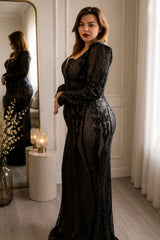
The back view below shows why a complete fit check matters on a fitted long-sleeve dress: the shoulder and back affect forward reach just as much as the visible front of the sleeve. If the body fits but the sleeve does not, sizing up may also change the bust, waist and shoulder placement. A tailor can assess possible adjustments based on seam allowance, fabric and construction; no alteration should be promised from a photograph alone.

Long-sleeve cocktail dresses: check the whole silhouette
A long sleeve does not always mean two identical sleeves. Asymmetric designs may combine a fitted long sleeve with a one-shoulder neckline, making the two sides of the bodice intentionally different. Check the product images carefully so the construction you receive matches the coverage you expect.
The burgundy velvet midi below pairs one fitted long sleeve with an asymmetric neckline, ruching and a slit. Its length and fabrication offer a different cocktail option from a full-length evening gown. Compare other lengths and sleeve combinations in the plus size cocktail dresses collection, using the event’s dress code as your guide.

Evening dresses with sleeves: let the sleeve set the level of detail
For an evening event, decide whether the sleeve is the main feature or part of a broader embellished design. Sheer balloon sleeves gather fullness toward the wrist, creating a different outline from bell sleeves that remain open at the bottom. Check both the fullest part of the sleeve and the wrist finish.
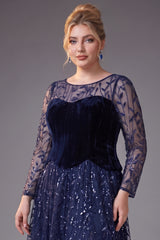
The navy gown below combines sheer balloon sleeves with sequins and a wide waist panel. If the sleeves and embellishment already carry substantial detail, simpler accessories can keep the overall look clear. For more event options, compare the plus size evening dresses collection by sleeve construction, length and garment measurements.

Maxi dresses with sleeves: balance sleeve, hem and occasion
Assess a maxi dress as one complete proportion: neckline, shoulder, sleeve, waist, skirt and hem. Check the garment’s length against your height and intended shoes, and compare its sleeve measurement with your arm. A fuller sleeve and fuller skirt create a different overall effect from a fitted sleeve and straight skirt; neither is a universal rule for every body.
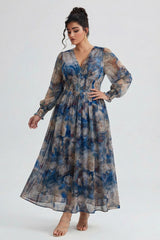
Bishop sleeves offer another useful comparison. They carry fullness through the sleeve and gather at the wrist rather than widening into an open bell shape. The blue floral maxi below uses sheer bishop sleeves, making the cuff and sleeve volume important parts of the fit review.

Explore additional hem and sleeve combinations in the plus size maxi dresses collection. Wedding guests can also compare options in the plus size wedding guest dresses collection, then check each product’s current colors, sizes and measurements.
Choose the sleeve that fits your plans
Start with the coverage and shape you want, then narrow the choice by fabric, armhole construction and movement. Use product photographs to identify the design and the measurement chart to assess the specific garment. The best sleeve for your event is the one whose appearance you like and whose construction lets you sit, reach, greet and dance without treating your arms as an afterthought.
Ready to compare complete dresses? Browse CURVEINS plus size formal dresses or select any product image above to return to its exact product page.